
DC holding electromagnets for fixtures and automation
- Round, ring, rectangular and multi-pole designs from one factory in Foshan, China.
- Coils wound for 12V or 24V DC as standard, other DC voltages on request.
- MOQ 50 pcs, samples in seven days, production in about 25 days.
A holding electromagnet is a DC coil potted inside a steel housing that clamps flat steel parts against its pole face while current flows and lets them go when the current stops. Lodegrip builds round, rectangular and multi-pole holding electromagnets in Foshan, China, for fixtures, pick-and-place heads and stamping lines.
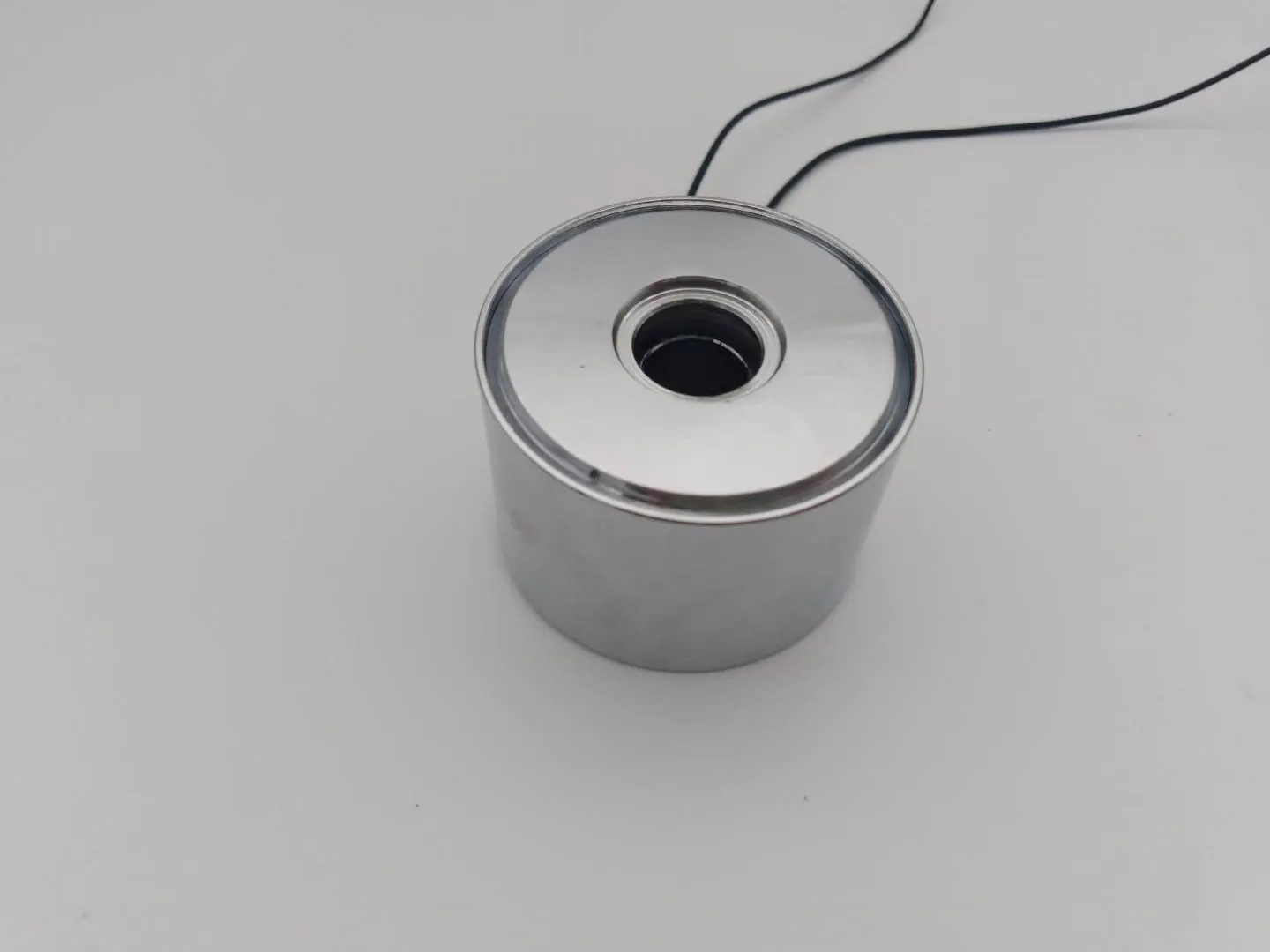
Which holding electromagnet shape fits your part?
Match the pole face to the contact area on the part. Round holding electromagnets suit flat faces and single-point fixing, rectangular ones suit long parts and narrow flanges, and multi-pole grippers spread force across wide sheet or bundles of bar. Ring and arc versions fit around bores, tubes and curved parts.

Round, ring and arc electromagnets
Diameters from about 10mm to 200mm, rated from a few newtons to about 9,500N. Ring and arc types fit bores and curved parts.

Rectangular and square holding electromagnets
Block bodies from under 30mm to over 500mm long, rated from a few newtons to about 7,000N, for long parts and sheet edges.
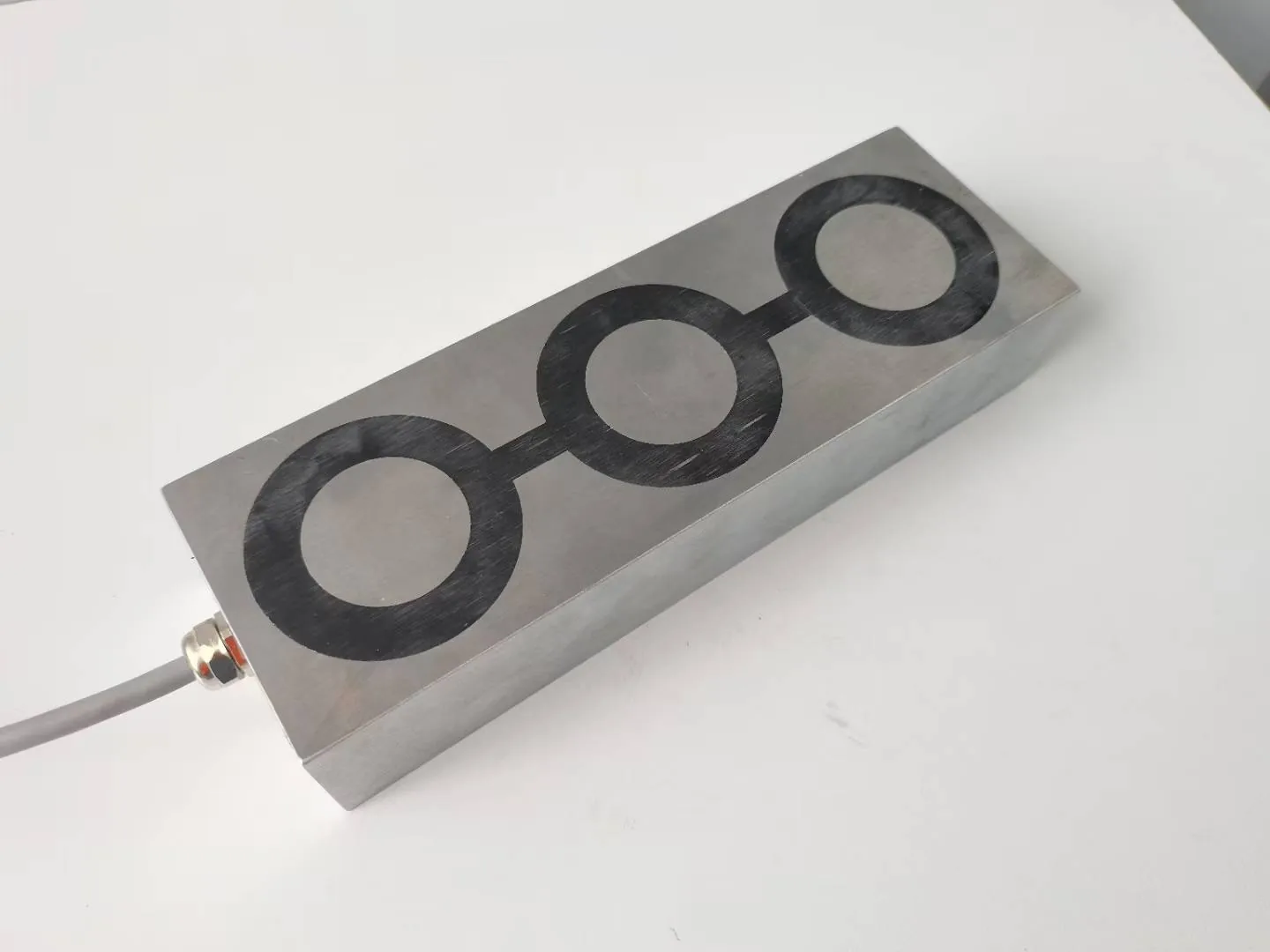
Multi-pole electromagnetic grippers for robots
Bars and plates with several poles that pick up sheet, blanks and rebar on robot arms and gantries.
How is holding force rated?
Holding force is the pull, in newtons, needed to drag a steel test plate straight off the energized pole face. The rating only holds for the stated conditions: supply voltage, plate thickness, steel grade, a zero air gap and a ground surface. Change any one of them and the usable force changes too.
Every Lodegrip spec table carries a footnote with those conditions. New designs go through four in-house type tests, and one of them is holding force against steel thickness, the test that tells you how much force is left on a thin part.
| Family | Size range (mm) | Holding force (N) |
|---|---|---|
| Round | About 10 to 200 diameter | Under 5 to 9,500 |
| Ring | About 60 to 130 diameter | Up to about 2,800 |
| Rectangular and square | Under 30 to over 500 long | 5 to 7,000 |
| Multi-pole gripper | About 300 to 600 long, or to drawing | 1,000 to 9,000 (estimated) |
Catalog ranges for standard designs in each family, at rated voltage on S235 low-carbon steel 5mm to 25mm thick, matched to each size, ground surface, zero air gap, coil at 20°C. Gripper figures are estimated ratings, confirmed on the customer’s drawing. Coated, curved or stainless parts hold less.
Need exact dimensions, force and a STEP file for one size? Send your part details to ask for a full datasheet, and we reply with the datasheet and 3D model.
A rough conversion helps with sizing: one kilogram of force equals 9.81N. The holding force calculation guide adds safety factors for vertical, horizontal and moving loads.
What reduces holding force in real use?
Four things cut holding force most: an air gap, thin steel, the wrong material and a rough or coated surface. Paint, rust, scale or a sheet of paper all act as an air gap. Steel too thin to carry the flux saturates, and austenitic stainless, aluminum and copper are not attracted at all.
- Air gap: force falls steeply with every tenth of a millimeter between pole face and part.
- Steel thickness: thin sheet cannot carry all the flux, so it holds less than the test plate.
- Material: low-carbon steel holds best, 400-series stainless holds at roughly half the force, and 300-series stainless does not hold.
- Direction of load: a part pulled sideways slides off well below the rated force, so add a stop or a friction pad for side loads.
Why does a part sometimes stay stuck after power off?
Residual magnetism in the steel housing and the part can hold a light workpiece for a moment after the current stops. Lodegrip can fit a spring-loaded ejector pin in the pole face or supply a matching armature plate, and some control circuits add a short reverse pulse to clear it.
Should you use 12V or 24V DC, and what duty cycle?
Use the voltage your control cabinet already supplies. Standard coils are wound for 12V or 24V DC, and other DC voltages are made on request. Duty cycle is the share of each cycle the coil is powered: a 100% ED coil can stay on continuously, while a 50% ED coil needs equal rest time.
Running a coil above its rated duty cycle pushes it past the 130°C limit of Class B insulation and shortens its life. Temperature rise is one of the four type tests each new design goes through for this reason.
Does a holding electromagnet release parts on its own?
Yes. A holding electromagnet releases the part as soon as the current stops, which is why it suits automatic pick-and-release. The same behavior means it drops the part in a power cut, so overhead or safety-critical handling needs a mechanical catch or a backup supply.
Where a power cut must never drop the load, a permanent magnet that holds with no power may suit better. Our electromagnet versus permanent magnet comparison sets out the trade-offs in one table.
Can Lodegrip build a holding electromagnet to your drawing?
Yes. The factory in Foshan has made electromagnets since 1992 and builds to customer drawings from 50 pieces. You can change the size, pole shape, voltage, force, mounting holes, lead length and connector. Samples take seven days, and a production run takes about 25 days.
Coils are epoxy potted with Class B insulation, and housings are zinc or nickel plated. Standard magnets are sealed to IP65 by the potting, and high-temperature versions with Class H insulation are built to order for hot parts.
Parts come from an ISO 9001 certified factory, use RoHS compliant materials and carry CE marking where the product falls under it. The Foshan factory and test process page shows how parts are assembled and checked.
Need linear motion rather than holding? The same factory makes tubular and open frame solenoids with spring return.
Holding electromagnet FAQ
What materials can a holding electromagnet hold?
Low-carbon steel holds best. Force drops on cast iron and 400-series stainless steel, and austenitic stainless such as 304, aluminum, copper and plastics are not attracted.
Does a holding electromagnet use power while it holds?
Yes. It draws its rated power the whole time the part is held, and the coil warms up. Rated power runs from under 1W on the smallest round sizes to more than 160W on the longest rectangular bars.
What happens if the power fails?
The part is released. Where a drop would be dangerous, add a mechanical catch or a backup supply, or use a permanent magnet instead.
How is a holding electromagnet mounted?
Most have threaded holes in the back face, from M2 on small sizes to M12 on large ones. Some have a center through hole or a flange.
What is the minimum order?
MOQ is 50 pcs per design. Samples take seven days and production about 25 days.
What should you send for a quote?
Send the part material and thickness, the part weight, the contact area, your supply voltage, the duty cycle and the yearly quantity. A drawing or photo of the fixture helps. Lodegrip replies with a suggested size, a sample plan and a quote for 50 pieces or more.
Foshan factory since 1992 · ISO 9001 certified factory · MOQ 50 pcs · samples in seven days