
Tubular and open frame push-pull solenoids
- Tubular bodies from under 15mm to about 90mm diameter, with strokes up to about 35mm.
- Open frame bodies from about 20mm to 80mm long, with strokes up to about 25mm.
- Push or pull action with spring return, coils mostly for 12V or 24V DC.
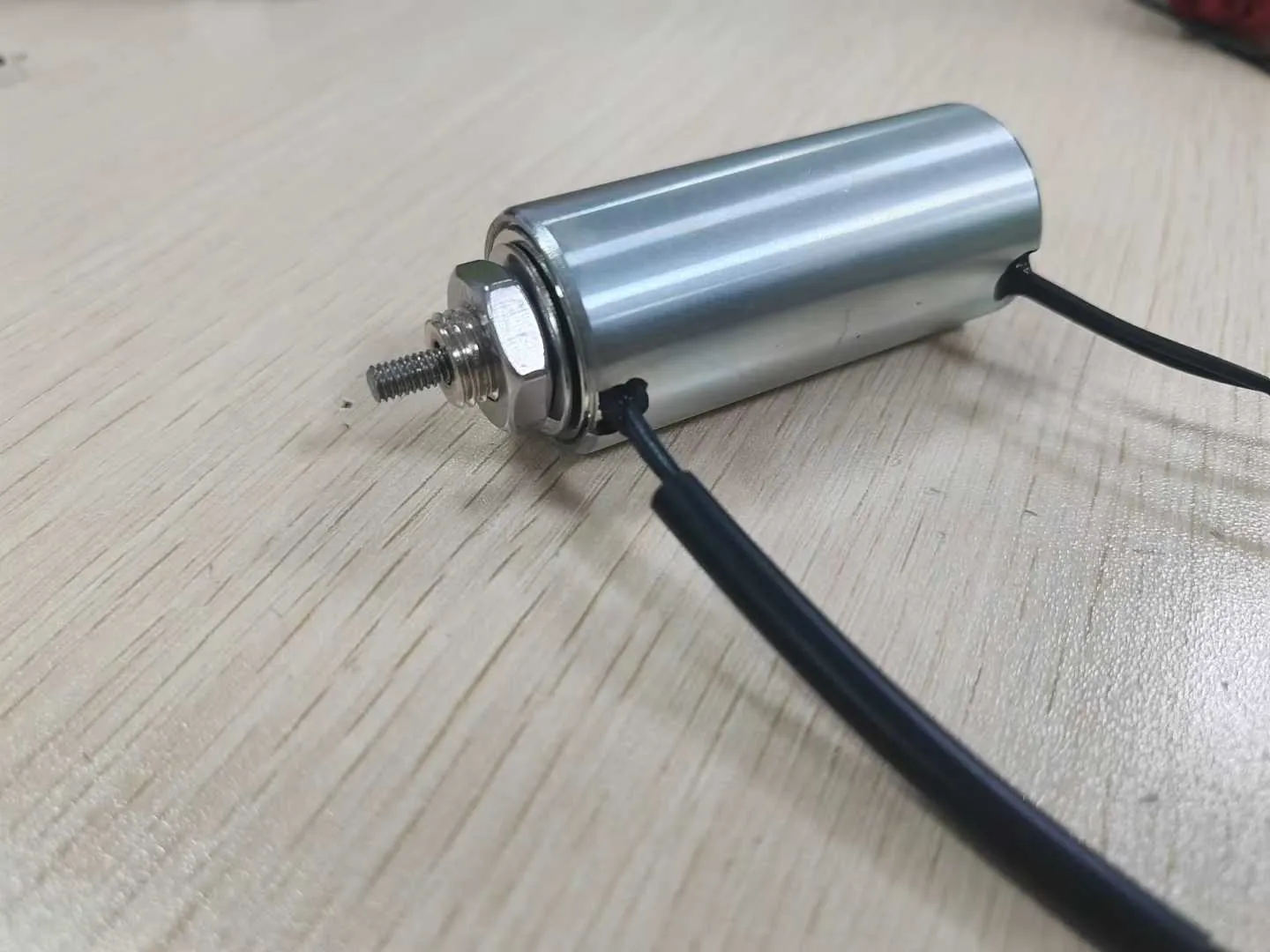
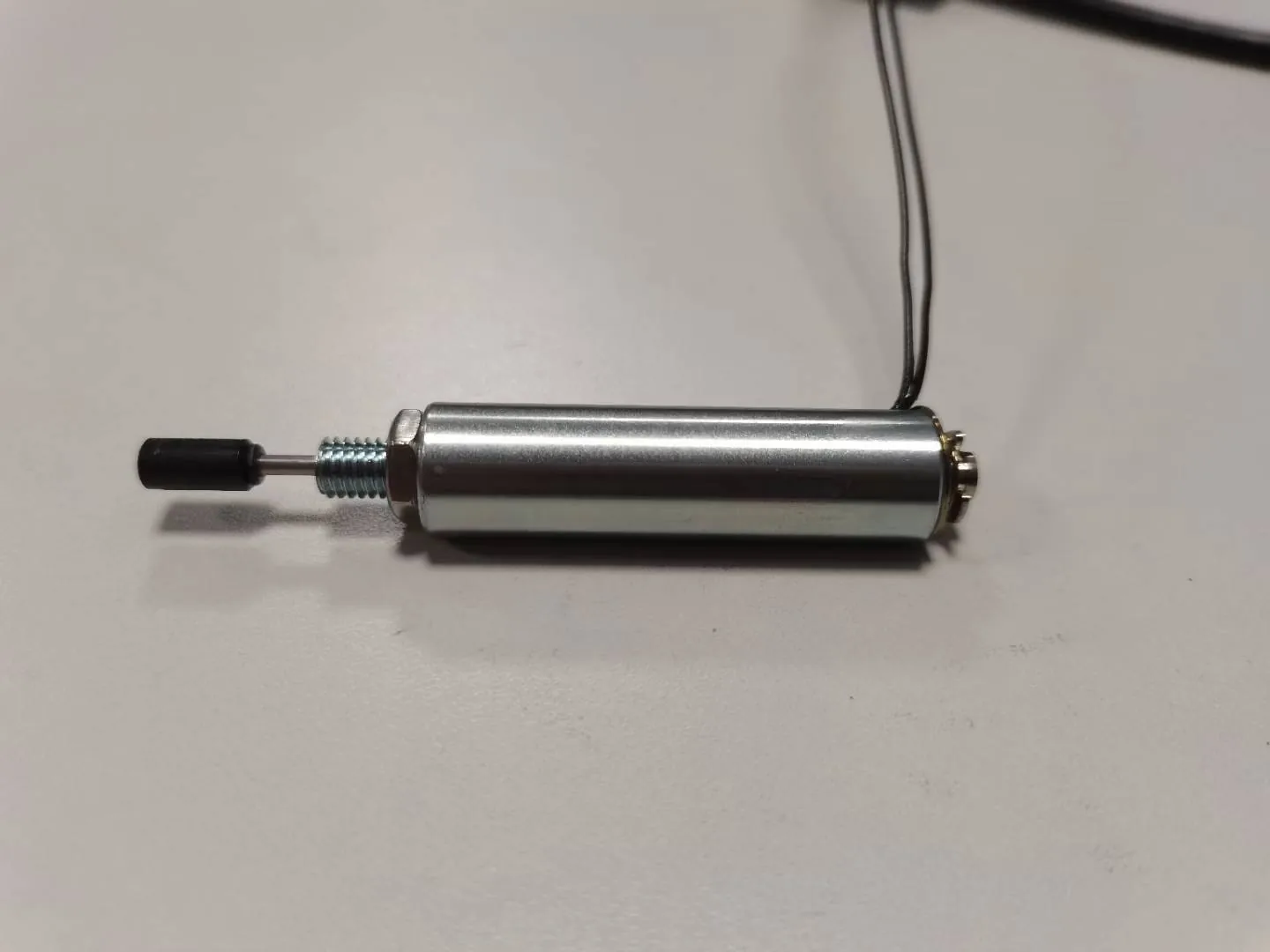
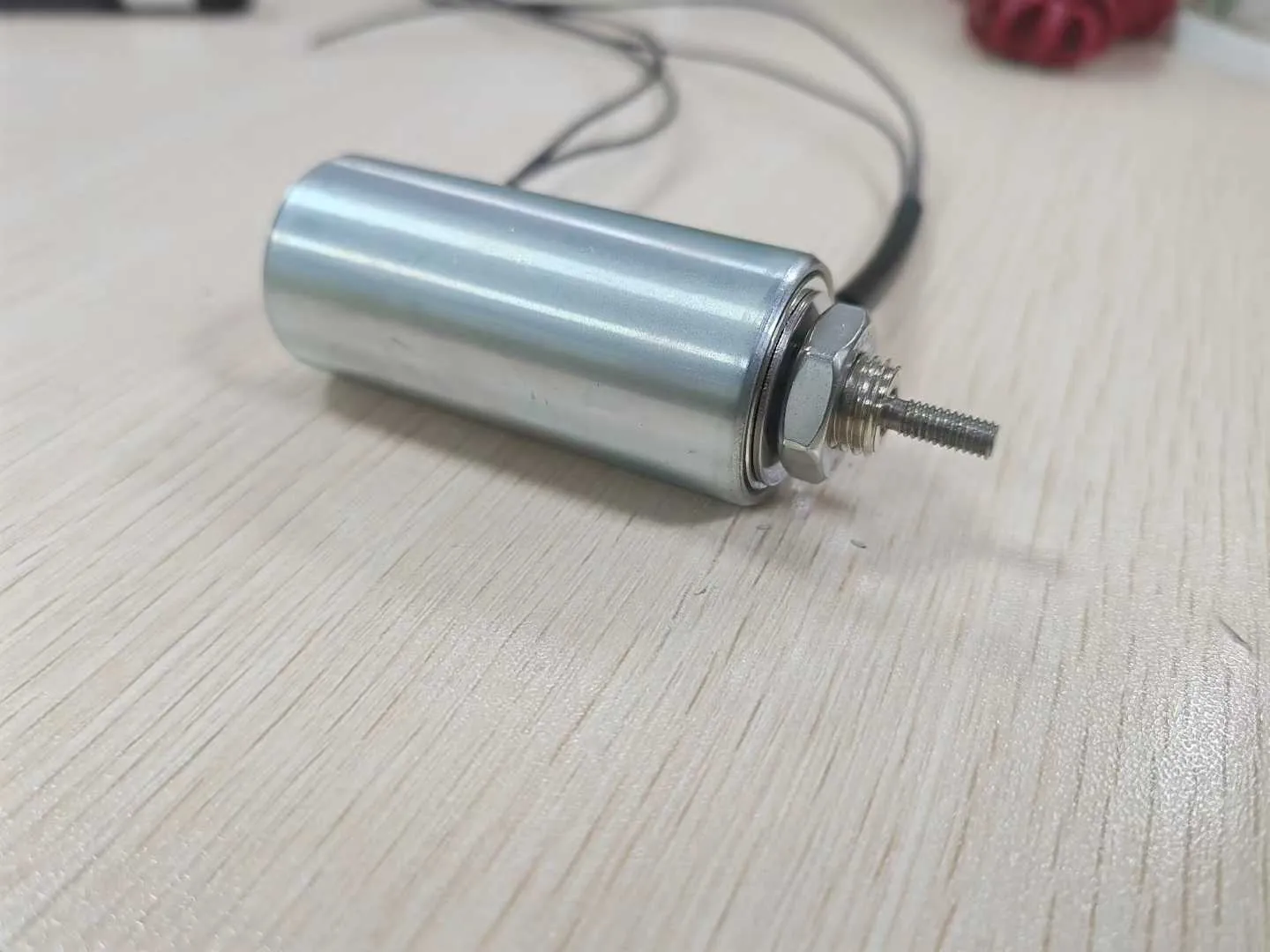
A tubular solenoid is a DC linear actuator in which a coil enclosed inside a round steel tube pulls a soft-iron plunger inward when powered. A return spring pushes the plunger back when the current stops. The closed tube gives more force for its size than an open frame and keeps dust out of the coil.

Solenoids are Lodegrip’s second product line, made in the same Foshan factory as the DC holding electromagnets for fixturing that form most of the range.
How does a push-pull solenoid work?
Every push-pull solenoid is a pull device at heart: the energized coil draws the plunger into the tube to close the air gap. A pull solenoid uses that motion directly. A push solenoid adds a pushrod through the far end, so the same inward motion pushes a rod out of the other side.
Force rises as the plunger closes in. A solenoid is weakest at full stroke and strongest near the closed position, which is why force is always quoted together with stroke. If the mechanism is still open, our guide to choosing push or pull action works through the return method, the mounting and the duty cycle.
Which tubular solenoid sizes are available?
Standard tubular solenoids run from under 15mm to about 90mm in diameter and up to about 160mm long. The smallest bodies give a few newtons near the closed position, with a few millimeters of stroke, and the largest reach several hundred newtons near the closed position at a low duty cycle. Voltage, stroke and plunger end are made to order.
| Diameter band (mm) | Stroke (mm) | Peak force at 10% ED (N) | Voltage (V DC) | Power, 100% to 10% ED (W) |
|---|---|---|---|---|
| Under 30 | Up to 10 | Up to 40 | 12 or 24 | 3 to 90 |
| 30 to 50 | Up to 30 | Up to 90 | 12 or 24 | 10 to 180 |
| Over 50 | Up to 35 | Up to 450 | 24 or 36 | 50 to 550 |
Peak force is the catalog rating at 10% ED for standard designs in each size band. At 100% ED expect roughly a third of the peak, and at 25% ED roughly 60%; these are engineering estimates, not test results. All values at rated voltage, plunger 1mm from the closed position, horizontal, coil starting at 20°C, no side load, cycle time 5 minutes or less. Force falls as the stroke gets longer.
Need exact dimensions, the force-stroke curve and a STEP file for one size? Send your stroke and load to request the solenoid datasheet and curve, and we reply with the datasheet and 3D model.

What are the options when you need a long travel solenoid?
Standard tubular bodies stroke up to about 35mm, and open frame bodies up to about 25mm. Beyond that a solenoid is the wrong tool. Multiply the travel with a lever, move to a different actuator type, or use a holding electromagnet if the real job is clamping rather than motion.
The reason sits in the air gap described above: at the open end of a long stroke the plunger is far from the pole piece, so only a small part of the closed-position rating is left. Asking for useful force at 20mm or more usually means stepping up one diameter band, dropping to a lower duty cycle, or both.
A lever is the cheapest fix. A 3:1 linkage turns 10mm of plunger travel into about 30mm at the load and divides the available force by the same ratio before friction, so check the force at the open position first. Where the part only has to be held still, a holding electromagnet does that with no stroke at all.
Long strokes are quoted from the application, not from a stroke figure on its own, so send the travel, the force needed at the open end and the cycle for long-travel solenoid sizing from your mechanism.
How does duty cycle change solenoid force?
Duty cycle is the on time divided by the total cycle time: one second on and nine seconds off is 10% ED. A coil used at a low duty cycle can take much more power for short pulses, so the same body gives far more force at 10% ED than it does running continuously.
In the tables, power spans roughly ten to one between 100% ED and 10% ED. Running above the rated duty cycle overheats the coil past its Class B limit, whatever the body shape. New solenoid designs go through in-house type tests for force-stroke, temperature rise and life; see solenoid testing at our factory.
What is an open frame solenoid?
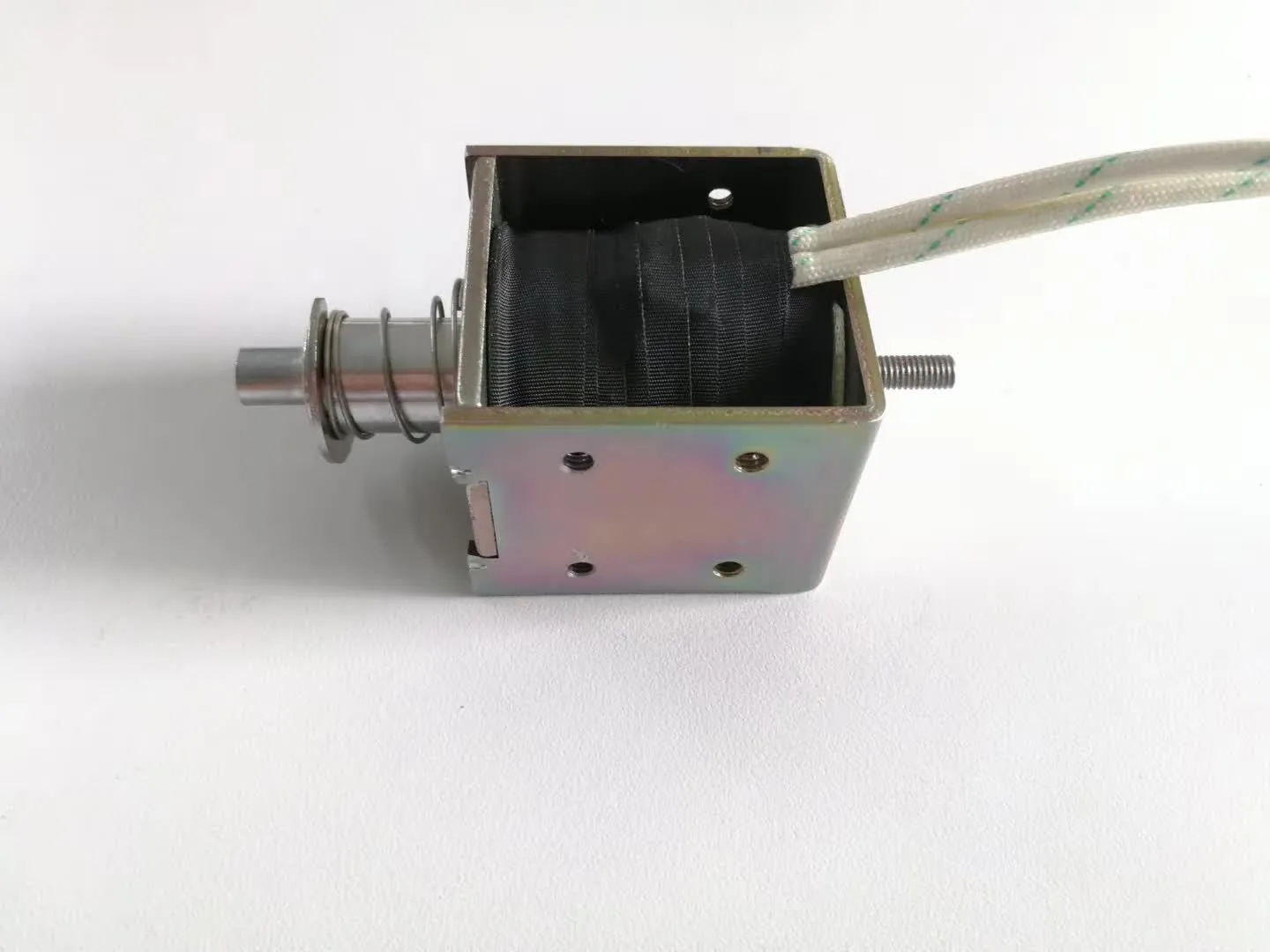
An open frame solenoid is a push-pull linear actuator whose coil sits in an exposed U-shaped or box-shaped steel frame instead of a closed tube. The open frame costs less and weighs less, fits flat mounting surfaces with its tapped holes, and suits dry indoor equipment such as vending machines, printers and home appliances.
| Body length band (mm) | Stroke (mm) | Peak force at 10% ED (N) | Voltage (V DC) | Power, 100% to 10% ED (W) |
|---|---|---|---|---|
| Up to 40 | Up to 10 | Up to 15 | 6, 12 or 24 | 1.5 to 40 |
| 41 to 60 | Up to 15 | Up to 25 | 12 or 24 | 5 to 75 |
| Over 60 | Up to 25 | Up to 60 | 6, 12 or 24 | 10 to 180 |
Peak force is the catalog rating at 10% ED for standard designs in each size band. At 100% ED expect roughly a third of the peak, and at 25% ED roughly 60%; these are engineering estimates, not test results. All values at rated voltage, plunger 1mm from the closed position, horizontal, coil starting at 20°C, no side load, cycle time 5 minutes or less. Force falls as the stroke gets longer.
Frame sizes and mounting holes vary by design, so ask for the frame solenoid drawing with your stroke and space limits, and we send the datasheet and STEP file.
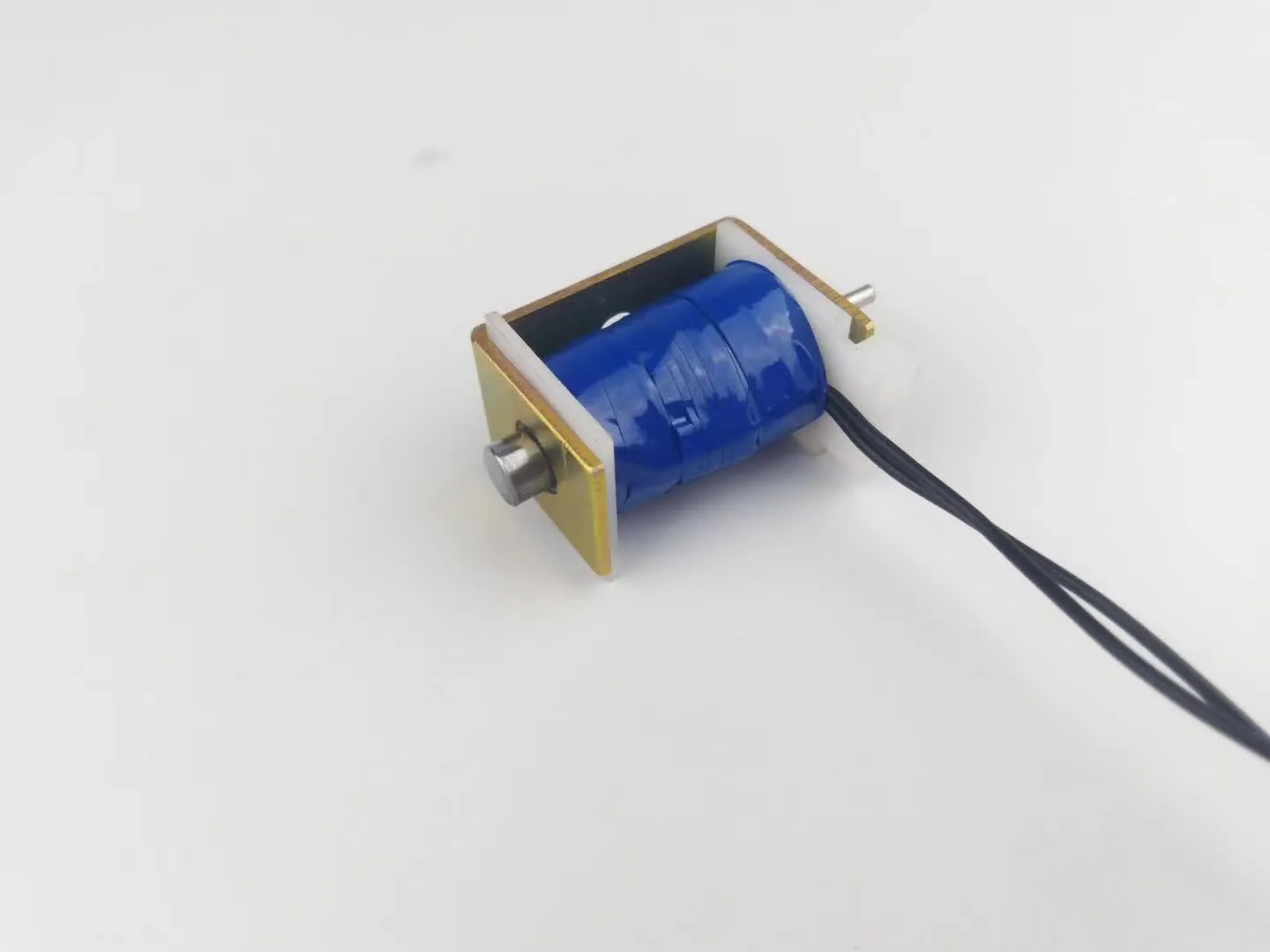

Tubular or open frame: which should you choose?
Choose a tubular solenoid when you need more force from a small diameter, longer stroke, or protection from dust and splashes; many tubular series are built to IP65. Choose an open frame solenoid when cost, low weight and a flat mounting face matter more, and the unit sits inside a clean, dry housing.
| Factor | Tubular solenoid | Open frame solenoid |
|---|---|---|
| Body | Closed round steel tube | Exposed U or box frame |
| Stroke | Up to about 35mm | Up to about 25mm |
| Sealing | IP65 possible | For dry, enclosed use |
| Mounting | Threaded end or nut | Tapped holes in the frame |
Where are industrial push-pull solenoids used?
Industrial push-pull solenoids drive short linear moves in vending machines, office and marking equipment, home appliances, medical and test instruments, transport equipment and automated assembly lines. Typical jobs are ejecting a part, releasing a catch, positioning a stop or switching a mechanism between two states.
Where a part must be held rather than moved, use round electromagnets for part holding instead.
What can be customized on a solenoid?
Stroke, force at a given stroke, voltage, duty cycle, body size, mounting style, plunger end, return spring and lead length can all be changed. Push or pull action is chosen per order, so the same tube and plunger ship as a push or a pull solenoid. Standard coils run on 12V or 24V DC, and other DC voltages are wound on request, from 50 pieces.
Coils are wound on a bobbin with Class B insulation, and steel tubes and frames are zinc or nickel plated. To get one made, request a custom solenoid quote with the stroke, the force at that stroke and your duty cycle.
Solenoid FAQ
Is a tubular solenoid the same as a push-pull solenoid?
Tubular describes the body shape; push-pull describes the action. Most tubular solenoids can be built as push or pull types.
Why is solenoid force given as a range?
Force changes with plunger position. The low figure applies at full stroke and the high figure near the closed position.
Does a push-pull solenoid hold its position without power?
No. A standard push-pull solenoid holds only while powered, and the return spring moves the plunger back when the current stops.
How do I work out the duty cycle?
Divide the on time by the total of on time and off time. One second on and nine seconds off gives 10% ED.
What is the longest stroke available on a standard solenoid?
About 35mm on tubular bodies and about 25mm on open frame bodies. Longer travel needs a lever or another type of actuator. Force at the far end of a long stroke is a small fraction of the closed-position rating, so quote the force you need at the open position, not the peak.
What is the minimum order for solenoids?
MOQ is 50 pcs per design. Custom solenoid samples take about 10 to 12 days, because plated parts go out for finishing, and production about 25 days.
How long is the lead time for push-pull solenoids?
Custom tubular and open frame solenoid samples take about 10 to 12 days, because plated parts go out for finishing before assembly. After approval, production takes about 25 days for orders from 50 pieces per design. A change to the plunger, spring or coil after sampling usually means a new sample, so settle stroke, force and duty cycle before the first one. Add shipping on top: samples go freight collect by courier, and production orders ship by the method agreed in the quote.
What do we need to quote a solenoid?
Send the stroke you need, the force required at that stroke, push or pull action, the supply voltage, the on and off times, the space available and your yearly quantity. A sketch of the mechanism helps. Lodegrip replies with a proposed size, a sample plan and a quote for 50 pieces or more. Ask for the 2D drawing or 3D STEP file of any standard size, and we send it with the quote.
Foshan factory since 1992 · ISO 9001 certified factory · MOQ 50 pcs · samples in 10 to 12 days